Showing posts with label reviews. Show all posts

Wednesday, May 21, 2014

Concert Review: Angela @ Anime Central 2014

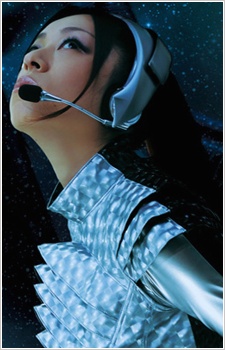
Another year, another Anime Central. Aside from being another phenomenally fun weekend, ACen was also home to this year's visiting musical guest: Angela. Angela had previously performed in the United States at Otakon 2004, so this year marks their first performance in the U.S. in almost a decade. But let's face it -- Angela is a hell of a lot more popular now after their recent songs appeared in a few hit shows.


Compared to the Kalafina concert last year, Angela's performance was significantly less crowded, taking place in one of the convention center's larger ballrooms rather than taking up an entire performance hall. Sadly, the crowd was both a bit small and rather subdued, which was a shame because Angela's performance was full of energy.

I hadn't explicitly investigated Angela before and didn't know many of their songs offhand, so I was surprised at the number of songs I actually recognized at the concert. Angela performed three songs from the 2012 show K, all of which I recognized. I was particularly thrilled when they performed "Tsumetai Heya, Hitori," one of my favorite anime songs ever and one that I was totally unaware Angela had written. In addition to the K music, Angela also performed "Angel" from Coppelion, which I knew from working with my collab group, as well as the OP to the new show Sidonia no Kishi. Unfortunately, it didn't seem that many in the audience knew even fewer songs than I did, which may have contributed to the low energy.

Angela was a fun band to watch. While atsuko (the vocalist) wasn't as animated as, say, KOTOKO, she was nonetheless fun to watch and sang beautifully. KATSU (the guitarist), on the other hand, was simply overflowing with energy, and the bassist and drummer who were helping out were equally enthusiastic. During one particular song, "Asu eno brilliant road" from Stellvia, atsuko taught us a cute little dance, which was quite fun.


Below is the setlist for Angela's Anime Central performance in no particular order, or at least all that I can remember. (There are probably a few missing, but oh well.) Click the little "x" to the left of each song to check it out on Last.FM.

[x] To Be With U (K Project)
[x] Tsumetai, Heya, Hitori (K Project)
[x] KINGS (K Project)
[x] Angel (Coppelion)
[x] Tooku Made (Coppelion)
[x] Sidonia (Sidonia no Kishi)
[x] Asu eno brilliant road (Stellvia)
[x] Separation (Stellvia)
[x] Shangri-La (FAFNER in the Azure)
[x] Beautiful fighter (Corpse Princess)
[x] Gravitation (Corpse Princess)
[x] Boku janai (Valvrave the Liberator)
[x] A new song whose name I can't recall

After closing their setlist, Angela came back to the stage after the audience demanded an encore. They'd performed all of their most recognizable songs by that point so I was a bit curious what they would perform, but nothing prepared me (or the audience, judging from the density of the cheers) for their encore:

[x] Cruel Angel's Thesis (Neon Genesis Evangelion)

(Apparently it's one of KATSU's favorites.) It was a bit ironic that their most popular song ended up being one that they didn't actually write, but it was still a very pleasant surprise.


Because I couldn't quite get enough of Angela even after the concert, I attended both Angela's poster signing, where I was able to briefly meet and interact with atsuko and KATSU. (My friend had the pleasure of sharing an elevator with atsuko, that lucky bastard.) I also attended Angela's final panel, where I learned (via their translators) a couple fun tidbits about the group:

-atsuko and KATSU were once in "rival" bands, but joined forces after moving to Tokyo. According to atsuko, they joined up was because they knew each other from high school.
-Angela was a struggling street band when the director of Stellvia approached them after hearing a performance. According to KATSU, anime "saved their careers."
-atsuko's favorite song they've produced is "Asu eno brilliant road."
-KATSU's favorite anime that they've produced for is Sidonia no Kishi.
-atsuko's favorite recent anime is Kill la Kill. (I wish I hadn't ditched my cosplay by then...)
-KATSU grew up on mecha anime, and a favorite of his is Neon Genesis Evangelion.
-KATSU's catchphrase is "she's a babe," which he learned because "it would be useful."
-Before composing each song, KATSU will thoroughly read the source material for inspiration.
-Angela writes over 8 different drafts for each anime song before sending it to their producers.
-atsuko has no formal training in music (despite being such a wonderful singer!).
-The music video for "Angel" stars Chiaki Kuriyama of Kill Bill fame.

Though I may not have been an Angela fan going into ACen, I definitely emerged as one. Angela's friendliness, passion, dedication and talent won me over, and I can't wait to hear the music they produce for anime in years to come.

'Til next time,

xds

Wednesday, May 22, 2013

Concert Review: Kalafina @ Anime Central 2013

This past weekend was Anime Central in Chicago, the third-largest anime convention in the United States. This year, Anime Central hosted a very special guest: Kalafina! While members of Kalafina have performed once before in the United States (Anime Expo in 2011), Anime Central 2013 marked the first time that the entire Kalafina band has performed in the U.S. I was fortunate enough to attend this wonderful performance.


Like perhaps many others, I was initially drawn to Kalafina via their lovely ED "Magia" from Mahou Shoujo Madoka Magica. Shortly thereafter, I watched Kara no Kyoukai and was further drawn in by their ending songs for the seven films. Before the concert, I decided to familiarize myself with some more of Kalafina's work, including songs from Kuroshitsuji, Fate/Zero, and the new Madoka movie. I'm really glad I did, as my familiarity with Kalafina's works really enhanced my enjoyment of the concert (compared to, say, the KOTOKO concert last year).

There are some groups who sound amazing in recordings, but rather lackluster in live performances. Kalafina is not one of these groups. I was constantly blown away by how terrific Kalafina's singing was, especially with the ridiculously long (16 songs!) setlist they went through. Kalafina's pitches were flawless, and the live performances sounded nearly identical to the recorded material; rarely was even a single note out of place. Major props to the singers and to the five talented band members (seriously though, that keyboardist was sick).


Compared to KOTOKO's performance, Kalafina's exuded a different type of energy. While the KOTOKO performance was full of vibrancy and lots of jumping up-and-down, Kalafina's performance demonstrated a much more deliberate, orchestrated style of energy. In fact, "orchestrated" is an appropriate adjective for Kalafina's performance as a whole; the entire performance was a carefully crafted piece of artwork full of poses, gestures, and sound. That brings me to my only gripe (if it can even be considered as such): that the performance was a little too perfect. For me, one of the appeals for seeing artists perform live is to see how they deviate from the source material. Kalafina's performance was faithful nearly note-for-note to the original source material, and while that's certainly a good thing, I would have enjoyed seeing Kalafina interpret the music a little more loosely.

Below is the setlist for Kalafina's Anime Central performance. (I actually took notes this time, so it's accurate!) Click the little "x" to the left of each song to check it out on Last.FM.

[x] Oblivious
[x] Consolation
[x] Kagayaku Sora no Shijima ni wa
[x] Red Moon
[x] Magia (the crowd went wild here)
[x] Hikari no Senritsu
[x] Door
[x] Mirai (Mami's theme from Madoka)
[x] Aria
[x] Signal
[x] Obbligato
[x] Ongaku
[x] The Whole Sky
[x] To the Beginning
[x] Hikarifuru
[x] Yume no Daichi

Every three songs or so, the three singers took a break to chat with the audience. I was pleasantly surprised by how interactive they were; while they did read from an English script (not always successfully, in Keiko's case), they interacted quite a bit with the audience, gauging our familiarity with the songs, pointing out cosplayers, and asking for restaurant suggestions. Also, Keiko's English was so cute gahhhh X_x

Oh, and random tidbits from the between-performance sessions:

-Keiko's speaking voice is surprisingly high, given her low singing voice.
-Hikaru is afraid of heights.
-Wakana likes dinosaurs.
-Keiko's favorite character is Rider (Fate/Zero).
-Hikaru's favorite character is Saber (Fate/Zero).
-Wakana's favorite character is Mami! (Madoka Magica)
-The audience suggested "hot dogs" as a food of interest for Chicago. Really?


For more Kalafina and pictures from Anime Central, check out their blog here. (I'm somewhere in that picture above! :D)

I had an absolutely wonderful time at Kalafina's performance at Anime Central, and I'd recommend any fan of their music to see them perform live if they get a chance. Sadly, I wasn't able to meet them at Anime Central this time, but perhaps I'll have the opportunity to hear them perform again in the future. I'd attend again without any hesitation. :)

'Til next time,

xds

Sunday, June 3, 2012

Concert Review: KOTOKO @ Animazement 2012

After another busy semester, I was finally able to take some time off to attend Animazement 2012 in Raleigh, North Carolina. The weekend was tons of fun and a post about AZ 2012 (and cosplay!) is in the works, but I wanted to take some time to review my highlight Animazement event of the weekend: the performance by KOTOKO.

I won't pretend to know much about KOTOKO beyond the bit of pre-con research I conducted to familiarize myself with her work, but I was certainly impressed by the few songs of hers I did listen to. Even more impressive to me, though, is the fact that KOTOKO writes much of the music and lyrics for her own work (and for other artists!). In a world where so many artists can take the spotlight from performance talents alone (or, as the case may be with some U.S. pop artists, not even that), it's really refreshing to see one who can not only sing well, but can also write great music.

Not counting the last-day-of-classes concerts that I attended during undergrad, this show marks my first live concert starring any vaguely famous artist. The show was hosted in one of the Raleigh Convention Center's ballrooms, outfitted with a stage, lights, and all the appropriate concert gear. The room was pretty small, but it fit the crowd just fine; felt kind of cozy, actually. My friends and I got in line pretty late, so we ended up close to the back; luckily, the room was small enough that we still had a pretty nice view of the stage.

The best thing about KOTOKO's performance, in my opinion, was her energy. She didn't just sing; she truly performed. She danced and moved around on stage almost as much as she sang (I can't imagine having to do both at once); at one point, she brought out a sword and began to swing it around. She took time between songs to engage with the crowd, despite her non-fluent (but very cute!) English. She changed into three separate outfits over the course of the concert. The crowd loved her, of course, clapping and fist-pumping with the music and even demanding an encore with chants of "KO-TO-KO!" Her energy was infectious. Maybe all Japanese artists are like this and I'm just naive, but seeing that much dedication to performance was something new and exciting for me.

Despite the very electronic nature of her music, KOTOKO came equipped with a trio of live performers: a guitarist, bassist, and drummer. For me, the live musicians added a lot to her performance. They played very well, of course, and also had a great deal of energy -- almost as much energy as KOTOKO herself, which is saying something. Plus, they were all dressed up as characters from Lupin, which was a fun touch. And maybe it's just my inner percussionist speaking, but I really enjoyed watching the drummer. Man, that guy can play.


As I alluded to earlier, I didn't know much of KOTOKO's work going into the concert, so I don't have many remarks on the repertoire. I certainly enjoyed the music a lot, though, with some personal standouts being Suppuration -core-, Shooting Star, Unite+reactioN, and unfinished (the ending to Accel World, incidentally the only song I knew well before the concert). I felt like I really got a taste of KOTOKO's musical style through her selection of pieces: for instance, her use of heavy electronic synths and characteristic vocal harmonies. Having a distinctive style is important for any artist, and KOTOKO really shines here.

Below is a setlist that I found somewhere online, arranged alphabetically because I couldn't remember the true order. Click on the little "X" marks before each song for a YouTube link; they're all great pieces.

[X] Ao-iconoclast
[X] being
[X] Chi ni Kaeru
[X] Face of Fact
[X] Hayate no Gotoku
[X] Hirake! Sora no Oto
[X] Light My Fire
[X] Oboetete ii yo
[X] Re-sublimity
[X] Sakura no Ame Moegi no Yo
[X] Shooting Star
[X] Special Life
[X] Suppuration -core-
[X] unfinished
[X] Unite+reactioN
[X] Wing my Way

Photos weren't allowed in the venue, so unfortunately I have no photo evidence from the event. To make my post prettier, though, I did steal a concert picture from KOTOKO's blog, so photo credits are all to her photographer. I'm in that crowd somewhere!


For more photos from the Animazement performance (and, if I'm not mistaken, KOTOKO touring various U.S. cities), check out her blog here. (Note that the blog's in Japanese.)

In the end, I had a great experience at KOTOKO's performance. Was it perfect? Of course not. But was it a lot of fun? Hell yes. I may not have been a KOTOKO fan going into concert, but I think I've been officially converted. :)

See you next time!

xds

Monday, April 23, 2012

Concert Review: Distant Worlds St. Louis

A few weeks ago, I had the pleasure of attending Distant Worlds: Saint Louis, an exhibition extraordinaire of music from the Final Fantasy series. Led by conductor Arnie Roth and none other than the esteemed Mr. Nobuo Uematsu himself, Distant Worlds marks the first Final Fantasy music tour in the United States. Final Fantasy tours and performances have been held regularly in Asia, Europe, and Australia, but Distant World was the first to cross the Atlantic Ocean. And the American fans everywhere rejoice.

Before I proceed, I have a confession to make: I haven't actually played any Final Fantasy games. O_o Consequently, the concert didn't have the same sort of nostalgic emotional impact for me as I'm certain it did for many other people. For me, it was more of a music appreciation and a learning experience, and I'm happy to say that there was plenty of both. If anything, going to the concert deepened my already-growing interest in the Final Fantasy franchise, and now that I finally have the means to play some games, some FF titles will certainly be in my future. Still, I hope you'll appreciate this view of a Final Fantasy concert from the viewpoint of a relative newcomer. Or at least write me hate mail :P

In any case, Distant Worlds took place in Powell Hall, a grand auditorium home to the Saint Louis Symphony Orchestra. As with my Video Games Live experience, I was a bit too cheap to pay the big bucks for fantastic seats, so I again ended up in the "budget section." I'd say that I got a pretty good deal for the price, though; our seats were directly in front of stage center, and despite being a bit far away, we had a fairly nice view of the orchestra. Win?


Because of my general unfamiliarity with the source material and of the time elapsed since the performance, I won't attempt to bore you with a comprehensive review of every song. Instead, I'll point out a few highlights, and a few areas that I would have liked to see done differently. For those interested, the full list is at the end of the post.

FINAL FANTASY Series: Victory Theme: Introductory song aside, this piece truly marked the beginning of the performance. The little two-bar phrase gathered some giggles from the audience, but wouldn't this be better reserved for the end of a battle section?

FINAL FANTASY I-III: Medley 2010: Listening to this piece legitimately gave me chills. The rendition of the prelude at the beginning was beautiful, and it was an amazing experience to hear the songs I'd studied in 8-bit realized in glorious full orchestra. Man.

FINAL FANTASY X: Zanarkard: Of all the pieces performed that evening, Zanarkand was probably the one that made me most question my life choices and wonder why I hadn't played a Final Fantasy game yet. The haunting melody, delicate interplay in the orchestra and piano, and background footage of Yuna's dance combined to a beautiful experience that words can't really describe. Simply put, I was blown away.

FINAL FANTASY Series: Chocobo Medley 2010: Can't have a Final Fantasy concert without this one popping up, right? I, for one, really enjoyed hearing the different variations, and wish they'd explored even more of them. Super-catchy.

FINAL FANTASY VI: Dark World: According to Arnie Roth, it took Nobuo Uematsu several years to decide on a song that he would be comfortable performing at one of the Distant Worlds events. As it turns out, "Dark World" was that song. I must say I was a little underwhelmed. The song itself was very nice, but there's got to be a song that demonstrates Mr. Uematsu's piano skills better than the quarter-note astinatos of this one. Nonetheless, it was an honor and privilege getting to see Nobuo Uematsu perform. :)

FINAL FANTASY Series: Vocal Pieces: Here I've lumped "Eyes on Me", "Suteki da ne", and "Kiss Me Goodbye", all starring Susan Calloway. So far as I could tell, she sang beautifully, but my seat was a bit too far away to discriminate the (English) words. According to some of my friends, however, maybe that's not entirely a bad thing...

FINAL FANTASY VII: Aerith's Theme: Another beautiful song that gave me shivers. Recognizing the source material really does a lot for the song's impact, and I hadn't even played FFVII before, only heard this song. Also, for those who don't know, "Aerith's Theme" was recently voted into the Classic FM Hall of fame by a large fan coalition. How cool is that?

FINAL FANTASY XIII: Blinded by Light: For all the hate this game gets, I really enjoyed this one, and I was even quite intrigued by the background footage from FFXIII. It's hard to follow in the footsteps of a giant like Nobuo Uematsu, but you can't deny that Masashi Hamauzu did a great job here.

FINAL FANTASY VI: Opera "Maria and Draco": I liked this a lot, but is it weird that I kept expecting it to be in Italian or French and tried to look for arias and recitatives the entire way through? I wonder what my opera-savvy friends would think of this number.

FINAL FANTASY VII: One Winged Angel: The unlisted true finale to the program. There was no choir present that evening, so the conductor asked the audience to sing. Additionally, Nobuo Uematsu popped out and stood at the front of the stage, waving posters with lyrics and thank-you messages. It was the cutest thing in the world. Now, if only the audience actually sang. X_x Come on now, we're all Final Fantasy nerds here; nothing to be ashamed of. I must say this song lost a lot of its raw power without the choral parts.


In the end, despite my unfamiliarity with the source material, I thoroughly enjoyed Distant Worlds: St. Louis. The music was fantastic, the performers sounded great, and seeing Mr. Uematsu in person was a rare and wonderful gift. For the entire car ride back, I pestered my friend to tell me more about Final Fantasy games; I'm sure he was tired of my questions by the end. Listening to the music really made me want to go play the games, and for me, there's no truer mark of the quality of a a video game soundtrack.

Here's the full program, for those interested:

FINAL FANTASY VII: Opening - Bombing Mission
FINAL FANTASY Series: Victory Theme
FINAL FANTASY I-III: Medley 2010
FINAL FANTASY X: Zanarkand
FINAL FANTASY VIII: Eyes on Me
FINAL FANTASY V: Dear Friends
FINAL FANTASY IX: Vamo' alla Flamenco
FINAL FANTASY X: Suteki da ne
FINAL FANTASY Series: Chocobo Medley 2010
FINAL FANTASY VIII: The Man with the Machine Gun
FINAL FANTASY VI: Dark World
FINAL FANTASY IX: You're Not Alone
FINAL FANTASY XII: Kiss Me Goodbye
FINAL FANTASY VII: Aerith's Theme
FINAL FANTASY VIII: Don't Be Afraid
FINAL FANTASY XIII: Blinded by Light
FINAL FANTASY VI: Opera "Maria and Draco"
FINAL FANTASY VII: One Winged Angel (Unlisted)

See you again soon,

xds

Sunday, August 8, 2010

Concert Review: Video Games Live Indy 2010

This past weekend, I had the pleasure of making it up to Indianapolis for Gen Con Indy, one of the largest annual gaming conventions in the world. Although the entire convention was an absolute blast (look for a post in the near future with details), the pinnacle of the convention was almost certainly Video Games Live. Video Games Live, founded by composers Tommy Tallarico and Jack Wall, is (to quote the website) "a concert event put on by the video game industry to help encourage and support the culture and art that video games have become." In essence, it's a group of touring video game musicians who work with local professional orchestras to put on a massive multimedia-filled performance of video game music.

Video Games Live at Gen Con was hosted at the Conseco Fieldhouse, a large arena typically reserved for sporting events. My friends and I were able to get "cheap seat" tickets for $15 a pop, which was amazing considering where our seats turned out to be -- we were literally right in front of the stage (albeit a bit far) with a perfect view of the orchestra. Epic success.


After a costume contest, Video Games Live kicked into gear with the "Classic Arcade Medley," a collection of tunes from popular arcade games of yore, including such hits as Pong, Space Invaders, Outrun, and Tetris. Tommy took the stage and introduced the next selection, from an obscure Japanese game called Afrika that probably 1% of the audience had ever heard of. I'm happy that Afrika was included in the program; the music was the perfect sort of majestic, and I'm always a fan of less popular video games getting some recognition. My one complaint about the Afrika performance was actually the choice of video; the music was much too grand for some of the boring menu-navigating scenes that somehow made their way into the montage.

The next three selections were Shadow of the Colossus, Assassin's Creed, and God of War, all solid arrangements that I enjoyed despite my lack of familiarity with the material. The next event was one pretty unique to Video Games Live; two contestants came on stage to play Frogger while the orchestra played along in real-time. The audience support for the players was phenomenal, with countless cheers echoing across the stadium as the contestants steered their frogs to the other side of the level.

Act I ended with a beautiful selection from Final Fantasy VIII as well as three Blizzard tunes, two from World of Warcraft and one from Starcraft. The first Warcraft piece was a particularly haunting vocal tune called "Lament of the Highborn," performed by vocalist Laura Intravia (more on her later). The two following pieces were good, but neither struck me as much as did "Lament of the Highborn." In all honesty, I wouldn't have minded so much had some of the Blizzard tracks been replaced with tunes from other games; three Blizzard pieces seemed overkill to me when there are so many other great video game pieces out there to be enjoyed.

The second half of the show opened up with two Koji Kondo medleys, Legend of Zelda and Super Mario Brothers. While I thought the Zelda arrangement was phenomenal, I do wish the Super Mario Brothers arrangement had been a bit more imaginative. It's a great (and classic...it's been circulating around the Web for a while) arrangement, but especially for a track that's been as done to death as the classic Mario theme, I wish they'd been able to explore the themes a bit more and/or work in the wealth of other Mario music out there.

The next performance was centered around Laura Intravia, this time arriving on stage with a flute and dressed as her alter ego "Flute Link." Her performance was of one of her own arrangements, a Legend of Zelda flute duet set above some techno-y background music. The performance was as interesting to watch as to listen to, with Laura acting increasingly irritated with Navi (the second flute part) floating over her shoulder and culminating in poor Navi being thrown across the stage. I managed to snap a photo with the talented Laura after the show (she's the one on the left, of course).


After Laura's performance, one of the more unique aspects of Video Games Live took the stage. A gentleman who'd won the earlier Guitar Hero competition was invited on the stage, and Tommy went to fetch his electric guitar. The contest winner was presented with another challenge: earn 250,000 points on the Guitar Hero: Van Halen song "Jump" on Hard while Tommy and the orchestra played along in real time. Of course, the contestant and audience demanded Expert instead. Again, the audience support during the performance was amazing, with a veritable explosion of cheers as the contestant finally broke 250,000 in the last few seconds in the song. Definitely one of the most entertaining acts.

Tommy and guitar remained on stage for the next few acts, which included medleys of Mega Man and Halo as well as the renowned Final Fantasy VII piece "One Winged Angel" (which the audience predicted even before Tommy announced the title). All were very well-arranged, although I do think Tommy's heavy electric guitar sound distracted from the music a bit, particularly for the Halo medley. After a false "show end" and a bizarre interlude of a Mass Effect "Vigil" recording, Tommy and Emmanuel returned to the stage to put on a rockin' Castlevania arrangement. Another false ending and singing "Happy Birthday" to Laura later (yep, it was her birthday xD), Tommy announced the real finale: Chrono Trigger.

The Chrono Trigger finale was definitely my favorite selection of the evening. Although I wasn't familiar with the original source material, the brilliant acoustic arrangement was gorgeous (especially considering its 16-bit origins), and the orchestra played with great passion. My lackluster recording below captures only a fraction of its beauty, but it is nonetheless a great fraction.


Overall, the show was wonderful, and it was great to be able to meet the composers/conductors/musicians after the show, as well. Most of my issues stem from my own unfamiliarity with the source material as well as the fact that I'd seen Video Games Live once before and was familiar with many of the selections. I do wish they'd chosen to showcase more obscure-game music like Afrika's, but I also understand the need to play pieces like Halo and "One Winged Angel" for the numerous fans of those popular games. All things considered, I still had a blast, and I'm sure those in the audience more familiar with the source material would have enjoyed it even more. Whether or not you've already seen it before, Video Games Live comes highly recommended. :)

kthxbai,

xds

Thursday, July 8, 2010

Game Review: Silent Hill 4

Silent Hill 4: The Room and I first met on a cold winter evening in late 2009. Shortly thereafter, a period of having-absolutely-no-free-time hit my life, and I was forced to abandon my nervous wanderings around Silent Hill for the even harsher realities of fluid mechanics and advanced circuit design. When my much-needed summer break finally hit in May, I breathed a sigh of relief before allowing Silent Hill 4 to scare my breath away once more. I'm happy to report that, months after beginning my journey, I finally completed the game a few weeks ago. The only thing left is to convince you to do the same. :)

For those who might be unfamiliar with the Silent Hill franchise, here's a quick bit of background. Konami debuted the series in 1999 on the PlayStation, and so far, six subsequent games have so far been released. The Silent Hill series focuses around the titular small town of Silent Hill, a place where psychological forces often take physical shape. Perception of Silent Hill is distorted according to the psychological state of the viewer, typically manifesting itself in either a fairly normal, populated town, an abandoned, foggy town, or a hellish, decaying town known as the Otherworld. Silent Hill games typically take place in this town, with altered characteristics depending on the character behind the screen.

Silent Hill 4, however, deviates from the previous three entries in that it is the first not to take place in the town of Silent Hill. The story begins in an unassuming apartment building in South Ashfield, a town adjacent to Silent Hill. The protagonist of the story, Henry Townshend, wakes up one day to find that he cannot leave his room. His door has been secured with numerous chains and locks, his electronics are dead, his windows can't be opened, and the outside world is completely obvious of his existence. After exploring around and realizing that nothing he tries will allow him to escape the room, Henry discovers a small hole that has opened up in his bathroom wall. And of course, like all good horror stories, Henry decides to climb through the hole in hopes of escaping his apartment, Room 302.

Trust me on this suggestion: grab a close buddy or two, wait until after 9 PM or so, and then cut out all the lights in the room before you play. I've played every Silent Hill I've gotten the opportunity to pick up in this manner, and let me tell ya, nothing beats the camaraderie that comes from being scared shitless together. The atmosphere of Silent Hill 4: The Room is spectacular. Rather than relying on cheap, sudden frights like some horror games, Silent Hill 4 manages to evoke a constant feeling of dread. The ominous background noises and omnipresent shadows make the player apprehensive of each approaching corner might be hiding, and the grainy filter only enhances the effect. Surprisingly, Room 302 itself is one of the creepiest parts of the game; although it's well-lit and resembles a typical apartment, there is unease to be found from its suffocating silence and occasional slight modifications. As pieces of the puzzle begin to reveal themselves and the sinister truth is slowly pieced together, the feeling of mystery and dawning realization rivals that of good suspense films.

As good as the atmosphere is, though, I can't help comparing it to Silent Hill 2, said by many to be the pinnacle of the series (and I wouldn't disagree). On the whole, Silent Hill 4 is much more predictable than its ancestor. The plot and level structure are rather linear; the game is split into a series of different worlds, most of which begin and end in the same fashion and many of which even repeat a second time. The monsters you'll encounter are noticeably less interesting than the Silent Hill 2 guys, with more obvious symbolism and only one or two inspiring genuine awe. Nonetheless, Silent Hill 4's environment is still fantastic, and makes the game worth playing in its own right.

The gameplay of Silent Hill 4 manifests itself in two different "modes" of sorts: a first-person perspective used to control Henry when he is exploring his apartment room, and a third-person perspective during Henry's visits to the plethora of alternate worlds into which his bathroom hole delivers him. While in Henry's room, the player typically walks around to examine objects, deposit and retrieve items from his inventory, utilize the game's sole save point, and (as the game progresses), interact with the changing state of the room. While in the other worlds, the player will continue to engage in exploration and item-finding, but with an added combat element for the occasional enemies that Henry will encounter and need to dispose of. The two areas are linked by a system of portals that resemble the hole in Henry's bathroom; unfortunately, this further adds to the predictability of the game by creating a methodical "okay, let's go back to the room and save" system that (in my opinion) compares unfavorably to the tension of Silent Hill 2's "omfg where's the next save point gonna be?" feel.

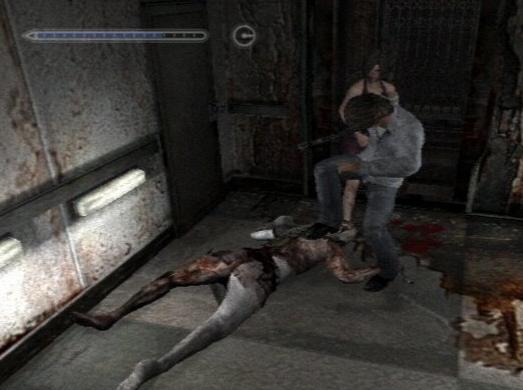
Discussion of the gameplay necessarily leads us to most of the game's biggest problems. Simply put, the gameplay, particularly the combat elements, leaves much to be desired. The control scheme works well enough for the exploring and item-finding, but is exceptionally awkward for the combat sequences, making combat much more frustrating than it needs to be. For example, Henry must stomp on a fallen enemy in order to properly "finish" it and prevent it from getting back up. However, that button combination is mapped to the same buttons as a normal attack, and the combat system forces Henry to lock onto any nearby enemies as a first priority. Consequently, many a monster will get back up not because the player forgets to finish it, but because the engine forces Henry to continue attacking nearby enemies rather than finishing downed ones. Even apart from that, the combat system isn't particularly exciting in itself, usually boiling down to whacking an enemy with a melee weapon before it has time to respond (firearms are all but useless in this game). The combat system is clearly the weakest element of Silent Hill 4, and a cleaner system would have aided its enjoyability considerably.

Silent Hill words of wisdom: No matter how dead enemies look, always stomp them to be sure.

A few other weaknesses merit some discussion; although these didn't bother me quite so much, I can imagine them being real thorns in other players' sides. The inventory system can feel unnecessarily restricting at times. Henry can only hold a limited number of items at any given time; if he runs out of slots, the player must either consume items (the ones that can be consumed, at least), or run back to Henry's room through a portal and deposit items into a chest. This system does add an extra layer of strategy to the game, as the player must choose the items he carries very carefully, but admittedly does result in multiple trips back to the apartment for no reason but to switch out items. This system contributes to the near-uselessness of firearms as well, since each round of bullets takes up a valuable slot in the inventory, and the weapons aren't powerful enough to make the lost space worthwhile. Another possible source of frustration exists in the character who joins Henry in his travels around halfway through the game; it is Henry's job to escort her around and keep her in good health. Unfortunately, she moves painfully slowly, often senselessly attacks large groups of enemies, and has a tendency to take damage if Henry moves too quickly or suddenly while in her proximity. My frustration was partially mitigated by the fact that, with the right upgrades, she can be made into a veritable killing machine, and that I actually felt some attachment to her character. Nonetheless, she will undoubtedly still be irritating at times.

Despite the mentioned faults, I still believe that Silent Hill 4: The Room is an experience not to be missed. I admit I might be rating it on the high side; it takes a certain kind of person to play horror games in the first place, and many will undoubtedly be turned off by the gameplay issues. In the end, however, the games are few and far between that make you look upon a ticking clock with fear and dread. Perhaps it would be wise to first begin with Silent Hill 2, but if you enjoy that game (and you should, it's one of my favorites ever), chances are high that you will enjoy braving the perils of The Room as well.

Final Score: 4/5


xds

Sunday, June 20, 2010

Game Review: Dreamfall

With the end of the spring semester about a month and a half ago, I've finally found some time to sit back and actually get some gaming done after a hiatus of nearly a semester. One such game I've had the luxury of recently completing was Funcom's Dreamfall: The Longest Journey, sequel to the critically-acclaimed 1999 game The Longest Journey.

But wait, you may be wondering, wasn't Dreamfall released over four years ago, on the bulky original Xbox that's all but obsolete now? The answer to your question is, of course, yes. I happen to be one of the few gamers who chose not to invest in one of the next-gen consoles (are they even next-gen anymore?), deciding instead that there are plenty of great Xbox 1 games I have yet to enjoy. Accordingly, I've accumulated quite the collection of last-gen games over the past few years, picked up from eBay for a pittance. Sure, occasionally this configuration has its detriments, but my gaming time has been limited enough of late, and fortunately most of the games I really want to play (read: Bioware games) have been available on the PC as well. Thus, I've had little trouble biding my time until something I really want to play releases for a new system. Shenmue III, for example.

Now then, less about me, more about the game at hand. The Longest Journey series revolves around a set of complementary parallel worlds: Arcadia, which has evolved around magic, and Stark (essentially a futuristic Earth), focused on science and technology. Although the universes are technically independent, they are nonetheless inextricably tied in ways not fully understood. The star of Dreamfall is a young Stark native named Zoë Castillo, a recent college dropout who seems to have lost direction in life. Fortunately for her, things quickly take a turn for the interesting. A simple favor for her best friend turns up a sinister plot, propelling Zoë into a journey that takes her not only around the world, but also between them.

My description may sound clichéd, but I still feel the plot of Dreamfall is its strongest element. Strong voice-acting and good scripting add believability and memorability to each of the characters, and the the world(s) simply crawl with history and detail. The story is well-timed, switching between various story arcs at strategic points so as to create a continual atmosphere of tension and mystery. The choice of having three playable characters is a clever concept, particularly when the characters' paths inevitably cross. Still, the plot development is not without its flaws. Despite generally excellent writing, occasional segments of narrative seemed stilted or artificial. Although the concept of two worlds and playing as different characters is pretty neat, some of the transitions can be a little...stark (haha, see what I did there?), with characters often shrugging off their recent extraordinary experiences and simply picking up where they left off. Lastly, the ending was, to put it bluntly, unsatisfying. The last fifth or so of the game felt rather rushed, tying very loose ends to some main plot threads and leaving at least as many hanging. Reaching the end credits of the game was a real "WTF?" moment for me, as I felt the game could easily have accommodated a few more hours of storytelling.


The Chinaman might be the most stereotypical Asian portrayal I've ever seen in a game.

As far as the actual gameplay is concerned, the best way I can describe it is a giant fetch-quest game with some tacked-on combat, puzzle, and stealth elements. Most of the game will involve piloting a character from Point A to Point B, realizing at Point B that you need some item from Point C, going to Point C to retrieve said item, and so forth. Admittedly, the puzzle elements may be more than "tacked-on"; nearly every area has a few challenges that must be completed before advancement, but most can be solved by examining the immediate vicinity for important items or by placing a call to Zoë's friend Liv. The combat elements, however, are less refined; fighting is limited to only a few areas, and can easily be completed using cheap tricks that the enemy AI can't seem to figure out for the life of them. Likewise, the stealth elements are also localized to small portions of the game and usually end up being more irksome than exciting. Certain features like the Focus Field, while interesting in concept, are used so rarely in the game that they're easy to forget about, leading to large amounts of frustration during the game sections in which they're actually necessary.

I've focused much on the negative aspects, but I do want to emphasize that Dreamfall is, in fact, an enjoyable game. Despite its shortcomings, Dreamfall's imaginative world, great cast of characters, gripping story, and lavish attention to detail still allows the game to shine, and shine well. Still, it's important to note that Dreamfall is essentially an interactive story, and even then not without . Even as a self-proclaimed fan of high-story, low-gameplay titles (Shenmue II, anyone?), I found myself wishing, at the end of hours of enthralling narrative, that Dreamfall might have been just a tiny bit more enjoyable.

Final Score: 3.5/5


xds